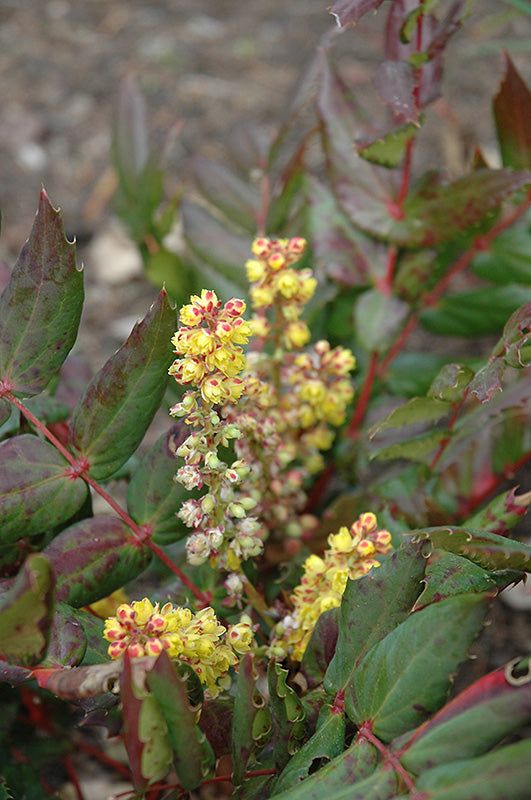

Cascade Oregon Grape or Oregon Grape Holly has attractive dark green foliage with light green veins on a plant with a spreading habit of growth. The spiny oval pinnately compound leaves are highly ornamental and turn an outstanding purple in the fall, which persists throughout the winter. It features bold racemes of fragrant yellow flowers rising above the foliage in mid spring. It produces powder blue berries from late summer to early fall.
Oregon Grape Holly will grow to be about 3 feet tall at maturity, with a spread of 24 inches. It tends to fill out right to the ground and therefore doesn't necessarily require facer plants in front. It grows at a slow rate, and under ideal conditions can be expected to live for approximately 20 years.
This shrub does best in partial shade to shade. It does best in average to evenly moist conditions, but will not tolerate standing water. It is not particular as to soil pH, but grows best in rich soils. It is somewhat tolerant of urban pollution, and will benefit from being planted in a relatively sheltered location. Consider applying a thick mulch around the root zone in winter to protect it in exposed locations or colder microclimates. This species is native to parts of North America.
Details
Botanical Name
Mahonia nervosa
Common Name
Cascade Oregon Grape
Hardiness Zone
- 5a
Appearance
Max Height
3 feet
Max Spread
24 inches
Plant Form
Foliage Colour
- Dark Green
Fall Colour
- Purple
Flower Colour
- Yellow
Edible
Edible Component
Edible Harvest Period
Edible Use
Fruit Colour
- Powder Blue
Growing
Flowering Period
Mid Spring
Moisture
Average
Sunlight
Partial Shade to Full Shade
Maintenance
Occasional
Deer Resistance
Yes
Get more information about this plant and others with our comprehensive plant finder tool.