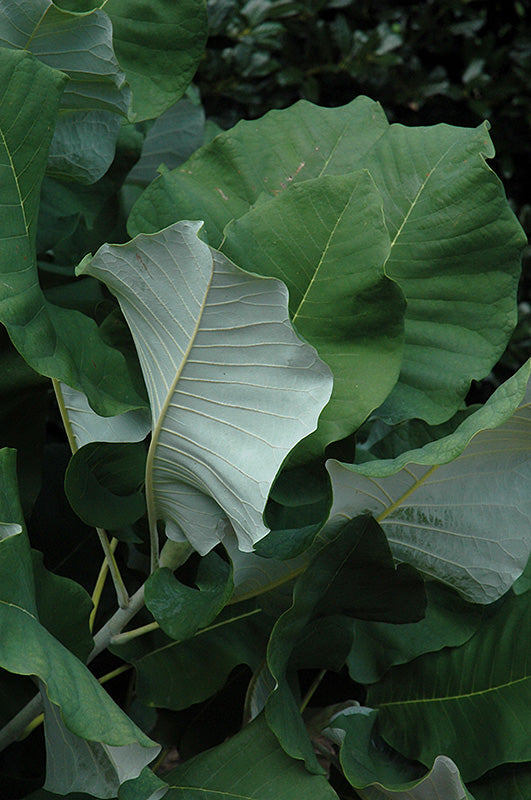

Bigleaf Magnolia features showy fragrant white cup-shaped flowers held atop the branches from mid spring to early summer. It has dark green foliage with silver undersides. The enormous oval leaves do not develop any appreciable fall colour. The fruits are showy red pods displayed in mid summer. The furrowed gray bark and silver branches add an interesting dimension to the landscape.
Bigleaf Magnolia will grow to be about 50 feet tall at maturity, with a spread of 40 feet. It has a low canopy with a typical clearance of 4 feet from the ground, and should not be planted underneath power lines. It grows at a medium rate, and under ideal conditions can be expected to live for 80 years or more.
This tree does best in full sun to partial shade. It requires an evenly moist well-drained soil for optimal growth, but will die in standing water. It is not particular as to soil type, but has a definite preference for acidic soils. It is somewhat tolerant of urban pollution, and will benefit from being planted in a relatively sheltered location. Consider applying a thick mulch around the root zone in winter to protect it in exposed locations or colder microclimates. This species is native to parts of North America.
Details
Botanical Name
Magnolia macrophylla
Common Name
Bigleaf Magnolia
Hardiness Zone
- 6b
Appearance
Max Height
50 feet
Max Spread
40 feet
Plant Form
Foliage Colour
- Green with Silver Undersides
Fall Colour
Flower Colour
- White
Edible
Edible Component
Edible Harvest Period
Edible Use
Fruit Colour
Growing
Flowering Period
Mid Spring to Early Summer
Moisture
Evenly Moist
Sunlight
Full Sun to Partial Shade
Maintenance
Low
Deer Resistance
YES
Get more information about this plant and others with our comprehensive plant finder tool.