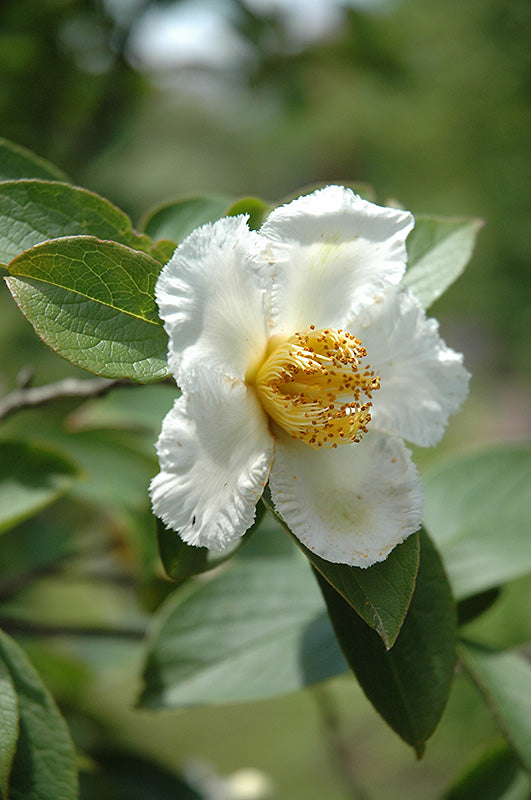
Japanese Stewartia will grow to be about 40 feet tall at maturity, with a spread of 30 feet. It has a low canopy with a typical clearance of 3 feet from the ground, and should not be planted underneath power lines. It grows at a slow rate, and under ideal conditions can be expected to live for 70 years or more.
This tree performs well in both full sun and full shade. It requires an evenly moist well-drained soil for optimal growth, but will die in standing water. It is very fussy about its soil conditions and must have rich, acidic soils to ensure success, and is subject to chlorosis (yellowing) of the foliage in alkaline soils. It is quite intolerant of urban pollution, therefore inner city or urban streetside plantings are best avoided, and will benefit from being planted in a relatively sheltered location. Consider applying a thick mulch around the root zone in winter to protect it in exposed locations or colder microclimates. This species is not originally from North America.
Botanical Name
Stewartia pseudocamellia
Common Name
Japanese Stewartia
Hardiness Zone
Max Height
30 Feet
Max Spread
30 Feet
Plant Form
Foliage Colour
Fall Colour
Flower Colour
Edible
Edible Component
Edible Harvest Period
Edible Use
Fruit Colour
Flowering Period
In Mid Summer
Moisture
Moist
Sunlight
Full Sun To Shade
Maintenance
Deer Resistance
Get more information about this plant and others with our comprehensive plant finder tool.
Japanese Stewartia will grow to be about 40 feet tall at maturity, with a spread of 30 feet. It has a low canopy with a typical clearance of 3 feet from the ground, and should not be planted underneath power lines. It grows at a slow rate, and under ideal conditions can be expected to live for 70 years or more.
This tree performs well in both full sun and full shade. It requires an evenly moist well-drained soil for optimal growth, but will die in standing water. It is very fussy about its soil conditions and must have rich, acidic soils to ensure success, and is subject to chlorosis (yellowing) of the foliage in alkaline soils. It is quite intolerant of urban pollution, therefore inner city or urban streetside plantings are best avoided, and will benefit from being planted in a relatively sheltered location. Consider applying a thick mulch around the root zone in winter to protect it in exposed locations or colder microclimates. This species is not originally from North America.
Pot Size
Location
Botanical Name
Hardiness Zone
Plant Form
Please confirm and select which store you wish to visit.
Customer Care
(250) 758-0944
info@greenthumbgardencentre.com
Visit Us
6261 Hammond Bay Rd
Nanaimo, BC V9T 5M4
Retail Garden Centre Hours
Every Day
9:00AM - 5:00PM
Wholesale Nursery Hours
Mon - Fri 8:00AM - 4:30PM
Not open to the public, Check in at the Office When Visiting